Understanding EPA and DHA on the label
Reading a supplement label can sometimes feel confusing with technical terms and various milligram figures. Here is a straightforward explanation of what EPA and DHA represent, and why clear labelling matters when choosing a daily food supplement.
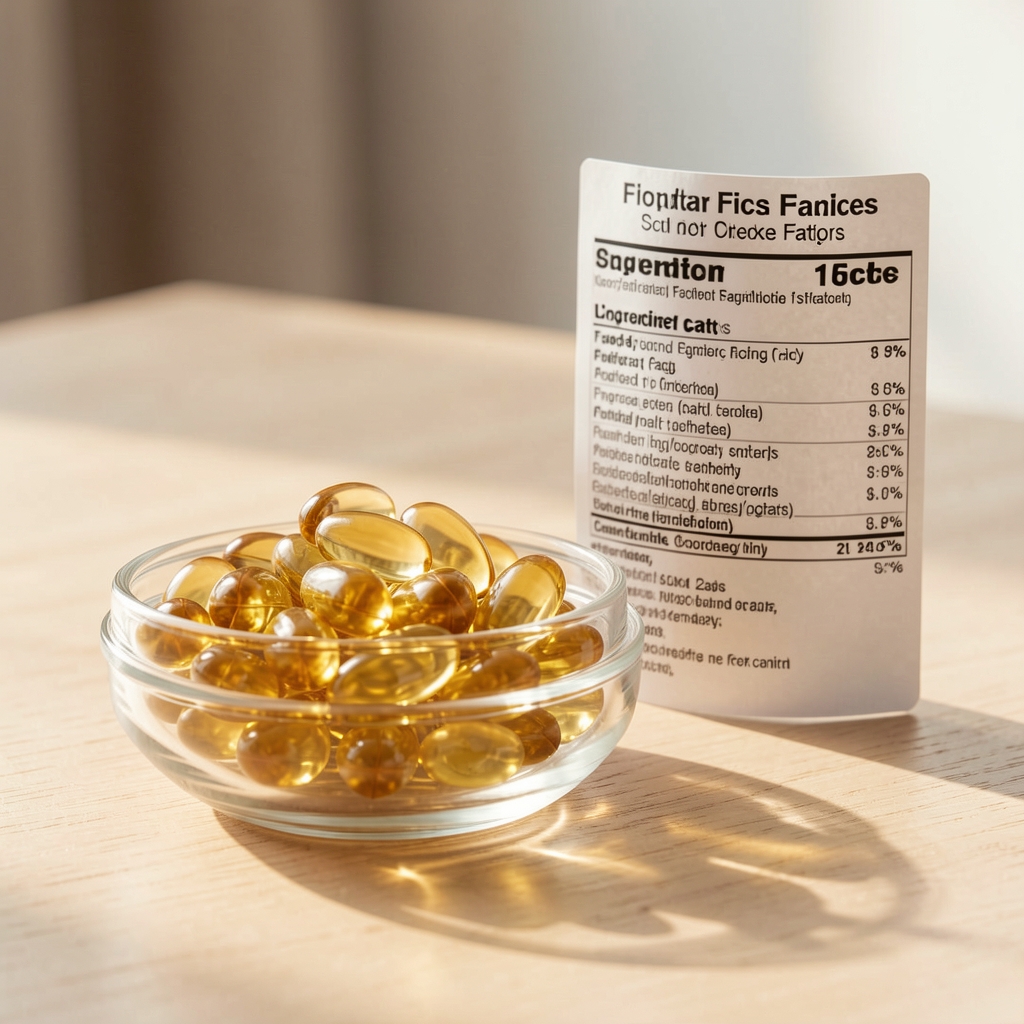
1. Total fish oil vs active fatty acids
When reviewing an omega-3 product label, the first number you often see is the total mass of fish oil per serving—for example, 3000 mg of concentrated fish oil. However, total fish oil weight alone does not tell the complete story. Fish oil is a natural carrier matrix composed of various fatty acids, only a portion of which consists of the key long-chain omega-3s: Eicosapentaenoic Acid (EPA) and Docosahexaenoic Acid (DHA).
Reputable food supplement manufacturers state both figures clearly: the overall weight of the oil concentrate, followed by an explicit breakdown of the specific EPA and DHA milligram counts per serving. In Omega-3 Triple, each daily capsule provides 3000 mg of fish oil concentrate, yielding 1800 mg of EPA and 600 mg of DHA.
2. Concentrated triglyceride form
Not all marine oil supplements are formulated in the same way. Raw, unrefined fish oil contains relatively low natural concentrations of EPA and DHA (typically around 18% EPA and 12% DHA). To provide higher milligram levels in a convenient single daily capsule, raw oil undergoes a purification and concentration process that yields concentrated triglyceride oil.
Triglyceride form is the structure naturally found in fish. Concentrating the oil while preserving its molecular structure enables high-potency servings without needing to swallow multiple bulky capsules each day.
3. Added vitamins and Nutrient Reference Values (% NRV)
Supplement labels in the United Kingdom and Europe also display Nutrient Reference Values (% NRV) for added essential vitamins. For example, Vitamin D3 (Cholecalciferol) and Vitamin E (D-alpha-tocopherol) are frequently included alongside omega-3 oils. Vitamin E acts as a natural antioxidant within the capsule to help protect the sensitive polyunsaturated fatty acids from oxidation over time.
The % NRV indicates what percentage of the standard daily intake recommended by UK food law is provided by one serving. For instance, 25 µg of Vitamin D3 corresponds to 500% NRV, while essential fatty acids like EPA and DHA do not have established NRV percentages under current food labelling regulations, which is why a dash (—) is shown in dosage tables.
4. Storing your supplement properly
Because polyunsaturated oils are sensitive to light, oxygen, and ambient heat, proper container storage helps maintain freshness across the full 90-day pack life. Store your bottle below 25°C in a dry kitchen cupboard away from direct sunlight, and always keep the lid tightly secured between daily uses.